Opening a Swiss bank account as a newcomer
The short version
- Your employer needs a Swiss IBAN to pay your salary. Open an account before your first payroll.
- Bring passport, employment contract and your Swiss address (or arrival date). Some banks let you start before you arrive.
- Compare fees, English support and the app. There’s no single “best” bank, only the one that fits you.
On this page
Why you need it early
Your salary, your rent, your health insurance premiums and your phone bill will all run through a Swiss account. Swiss employers pay salaries into a Swiss account with a Swiss IBAN (it starts with “CH”). Landlords also expect your rental deposit in a dedicated deposit account in your name, usually at a Swiss bank.
So the account is one of the first things to sort out. Ideally before you arrive, at the latest in your first week.
Types of banks
Switzerland has many banks, and most offer accounts for private customers. Broadly, you’ll see:
- Big banks with branches across the country and international services.
- Cantonal banks (Kantonalbank / banque cantonale), one per canton, with a regional focus.
- Cooperative and regional banks, with branches in many towns and villages.
- PostFinance, linked to Swiss Post.
- Digital banks and app-based accounts, often opened entirely on your phone.
We don’t rank banks. What matters is what you need.
What to compare
| Question | Why it matters |
|---|---|
| Monthly account and card fees | Fees vary a lot. Some are waived with a minimum salary or balance. |
| Opening before arrival | Useful if your first salary comes soon after you start. |
| Opening online | Saves a branch visit, but needs a video or app identification. |
| English support | Helpful for contracts, letters and the app. |
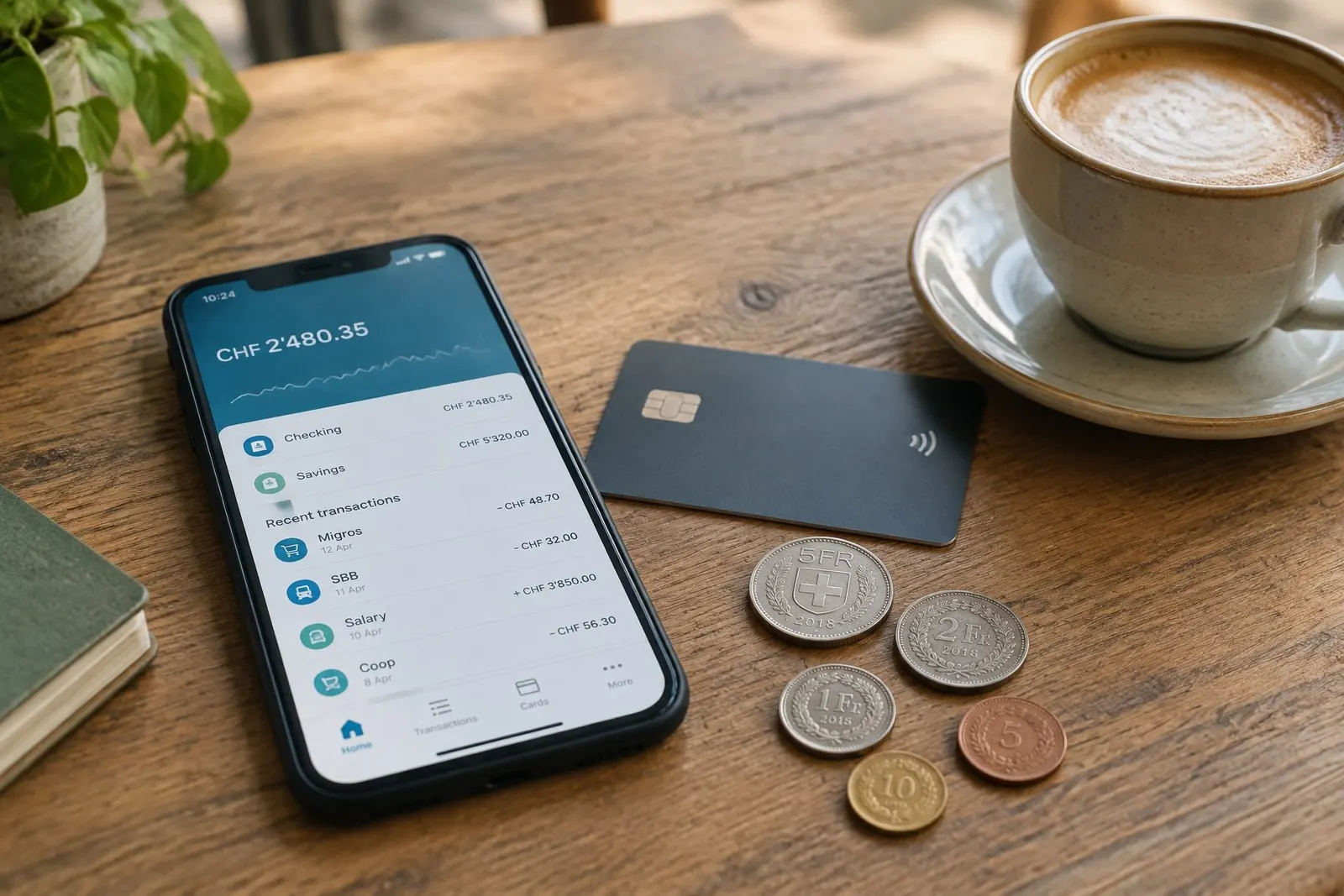
| Debit card and TWINT | You’ll use both every day. |
| Rent deposit account | Convenient if your bank also offers one. |
| Foreign currency transfers | Important if you still pay bills or send money abroad. |
What to bring
- Passport or ID. Your permit card, once you have it.
- Employment contract.
- Swiss address, or your arrival date if you don’t have one yet. Without a Swiss address, some banks ask for extra documents.
- Tax residence information. Banks must ask where you’re tax resident and may ask for a tax identification number from your home country.
US citizens and green card holders: some banks have extra requirements or don’t open accounts for US persons, because of US tax reporting rules (FATCA). Ask before you apply.
Step by step
- Shortlist two or three banks that fit your needs.
- Check whether you can open the account before arrival or online.
- Prepare your documents.
- Open the account and order your debit card.
- Send your IBAN to HR before the first payroll.
- Set up TWINT, the Swiss mobile payment app, and link it to your account.
- Activate eBill in your online banking, so many invoices arrive straight in your app.
Opening usually takes between one and ten days.
Paying like a local
- TWINT: used to split dinners, pay at markets and buy tickets.
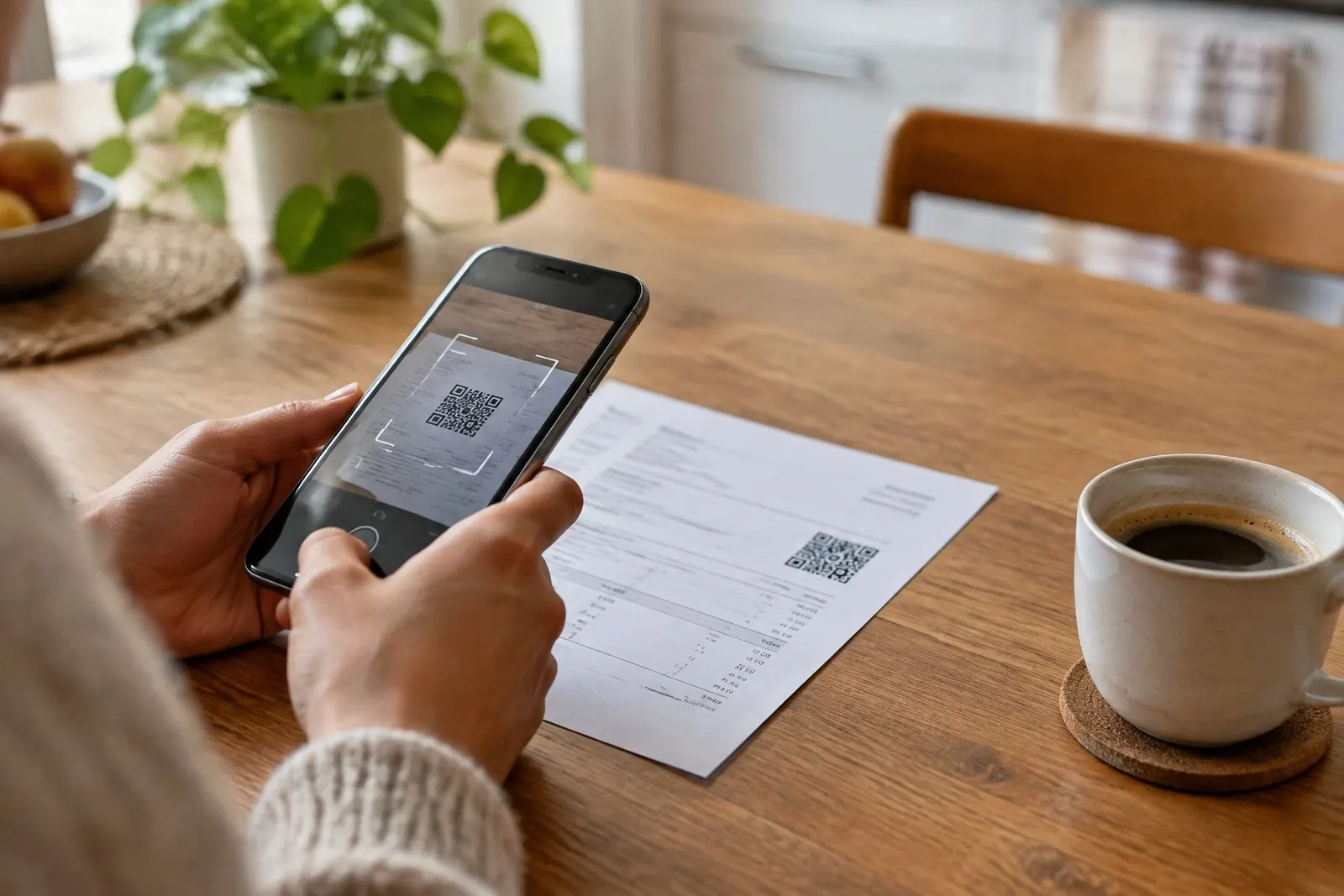
- QR bills: most invoices come with a QR code you scan in your banking app.
- eBill: companies send invoices directly to your online banking for approval.
- Cash: still accepted almost everywhere.
Credit cards without a Swiss history
As a newcomer you don’t have a Swiss credit history yet. Some banks issue a credit card right away, others ask you to wait a few months or offer a prepaid card first. A prepaid or debit card covers most needs in the meantime.
Is my money protected?
Deposits at Swiss banks are protected up to CHF 100,000 per customer per bank by the banks’ deposit insurance scheme (esisuisse). It’s good to know, especially if you transfer savings from abroad.
Common mistakes
- Waiting until after the first salary to open the account. HR then pays late or by cheque.
- Paying a rental deposit into a private account of the landlord. Deposits belong in an account in your name.
- Forgetting to tell your bank when your permit card arrives or your address changes.
Local tip
Ask HR whether your employer has an agreement with a bank. Some employers arrange reduced fees or a quick opening process for new staff.
Related tasks
Sources and last update
Last checked: November 2026
- Swiss IBAN, documents, TWINT, QR bills: First content brief and content pack v2 (T08).
- Deposit protection CHF 100,000 per customer per bank, esisuisse: https://law.ch/lawnews/2022/07/einlegerschutz-zugunsten-der-bankkunden-ein-update/ (checked November 2026)
- Rental deposit in an account in the tenant’s name: https://law.ch/lawinfo/mietrecht-miete-mietvertrag/mietzins-und-nebenkosten/mietzins-kaution/
- Practical guidance by firstweeks.
firstweeks provides general information, not legal or tax advice. Rules can change. Always check with the responsible authority.