
Rules in your canton may differ. Check with your municipality.
The foundation for everything else
Your permit and your registration are the quiet foundation of your new life in Switzerland. Your bank, your health insurer, your landlord, your employer and your children’s school will all ask about them sooner or later. The good news: once both are in place, most other steps fall into place too. This guide explains the permits in plain words, what happens at your first office visit and what to think about if your family comes with you.
On this page
Your tasks in this topic
- Find your permit type in your job offer or ask HR.
- EU/EFTA: usually B for contracts of 1 year or more, L for shorter ones.
- Non-EU/EFTA: your employer usually starts the process.
Time needed: 15 minutes.
- Passport or ID for every family member.
- Marriage certificate and birth certificates in original.
- Official translation if not in a national language or English.
Time needed: 1 to 3 weeks if translations are needed.
- Book an appointment where required (city of Zürich, Lausanne).
- All family members may need to attend in person.
- Bring originals.
Time needed: 30 to 60 minutes at the office.
The four permits in plain words
Switzerland uses letters for its permits. For EU/EFTA nationals, the rules come from the free movement agreement:
| Permit | What it is | Typical validity |
|---|---|---|
| L (short-term) | Employment contract under one year | For the duration of the contract |
| B (residence) | Contract of one year or more, or unlimited | 5 years, renewable |
| C (settlement) | Permanent settlement | After 5 years for EU-15/EFTA nationals, usually 10 years for other EU states |
| G (cross-border) | You live abroad, work here and return home at least once a week | Applied for in the canton where you work |
Self-employed people and people without work who have sufficient means and health and accident insurance can also receive a B permit. If you lose your job, you can usually stay for six months to look for a new one.
For third-country nationals, the C permit normally comes after ten years, the last five of them uninterrupted with a B permit, and you need to meet integration criteria. Nationals of some listed countries, including Germany, France, Italy, Austria, the UK, Canada and the USA, can get it after five years.
EU/EFTA or not: why it matters
If you’re an EU/EFTA national and stay longer than three months, you apply for your permit yourself, via your municipality, when you register. For short assignments of up to 90 days per calendar year, a notification by your employer from the first day is enough.
If you’re from a third country, things are more formal. Work permits are limited by annual quotas: for 2026, 8,500 for third-country specialists (4,500 B and 4,000 L permits), plus a separate quota of 3,500 for UK nationals. The quotas for 2027 have not been decided yet. For non-EU/EFTA nationals, the work permit is usually applied for by your employer. Ask HR about the status.
A note for UK nationals: since 1 January 2021, you count as a third-country national for permits. Many older guides still say otherwise.
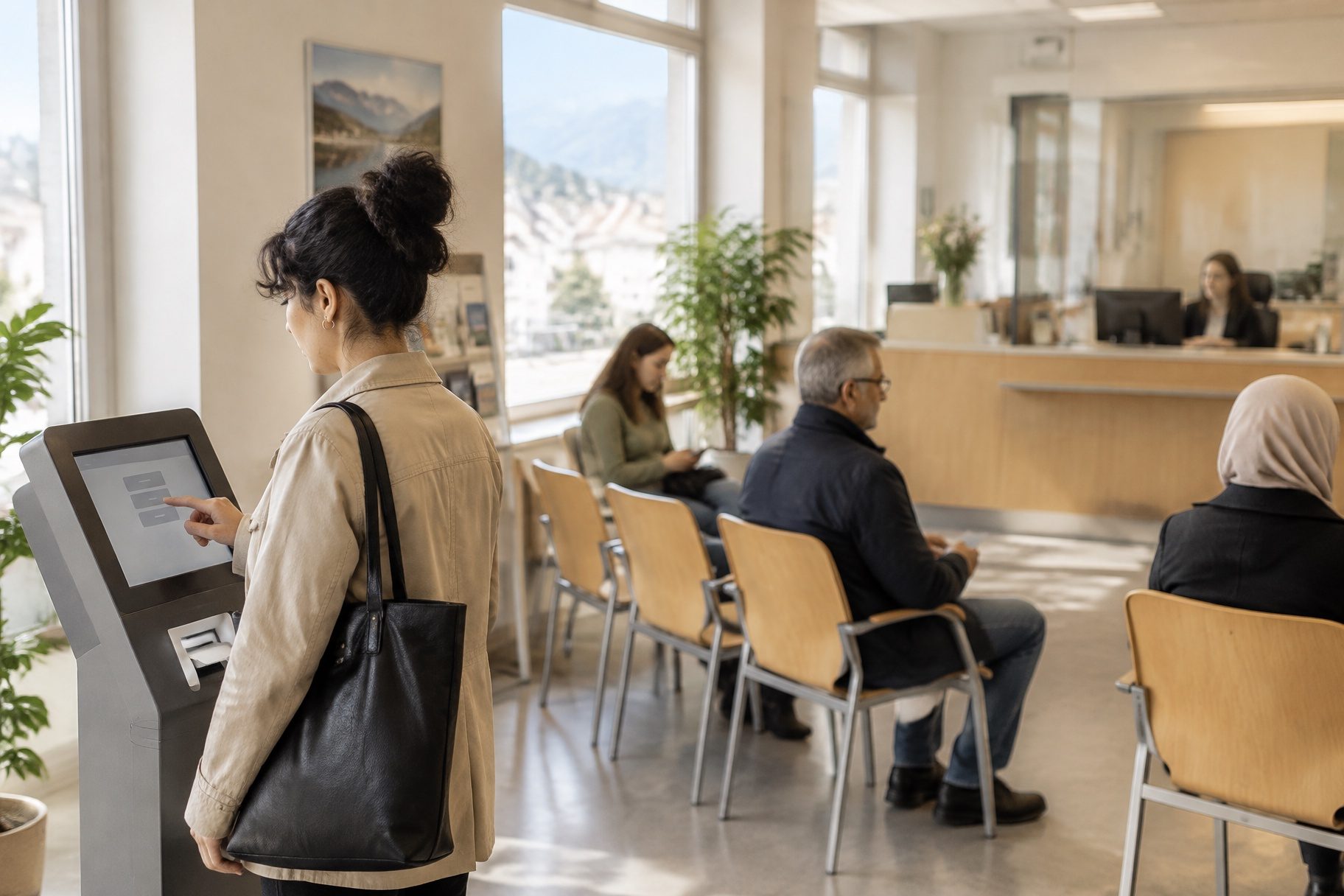
Your first office visit
Within 14 days of arrival, and before you start work, you register with your municipality. This also applies if you don’t work. Older guides mention eight days; that’s outdated.
Where you go depends on your city:
| City | Where you register | Good to know |
|---|---|---|
| Zürich (city) | Personenmeldeamt | Appointment needed. All family members appear in person. CHF 40 per adult, plus migration office fees. Extension possible if no appointment is available. |
| Geneva | OCPM (the canton, not the commune) | Online arrival notice combined with the permit application possible. Separate forms for EU/EFTA and third-country nationals. |
| Basel | Einwohneramt Basel-Stadt | Form and info sheet online. Deadline likely 14 days. |
| Zug | Residents’ office of your municipality / Amt für Migration | Deadline likely 14 days. |
| Lausanne | Contrôle des habitants, Rue du Port-Franc 18 | Appointment and personal attendance required. Only complete files are accepted. |
Fees outside the city of Zürich are set locally. Check with your office before you go.
What to bring: passport or ID for everyone, proof of address (your rental contract or temporary housing booking), your assurance of permit (Zusicherung) and visa if you have them, your employment contract, civil status documents in original (marriage certificate, children’s birth certificates) and official translations if they’re not in a national language or English.
The visit itself usually takes 30 to 60 minutes. You leave with a registration confirmation. Keep it safe: your bank, your children’s school and your insurer may ask for it. Your permit card (Ausländerausweis) follows later.
Your AHV number
You’ll get a Swiss social security number (AHV number, 756.xxxx.xxxx.xx). It’s usually arranged when you register or start working. Your employer can help.
Travelling before your card arrives
It’s one of the most common questions in the first weeks: can I fly home for a weekend before my permit card is here? If you need to travel before your permit card arrives, check first with the migration office or your employer. Rules differ for EU/EFTA and other nationals.
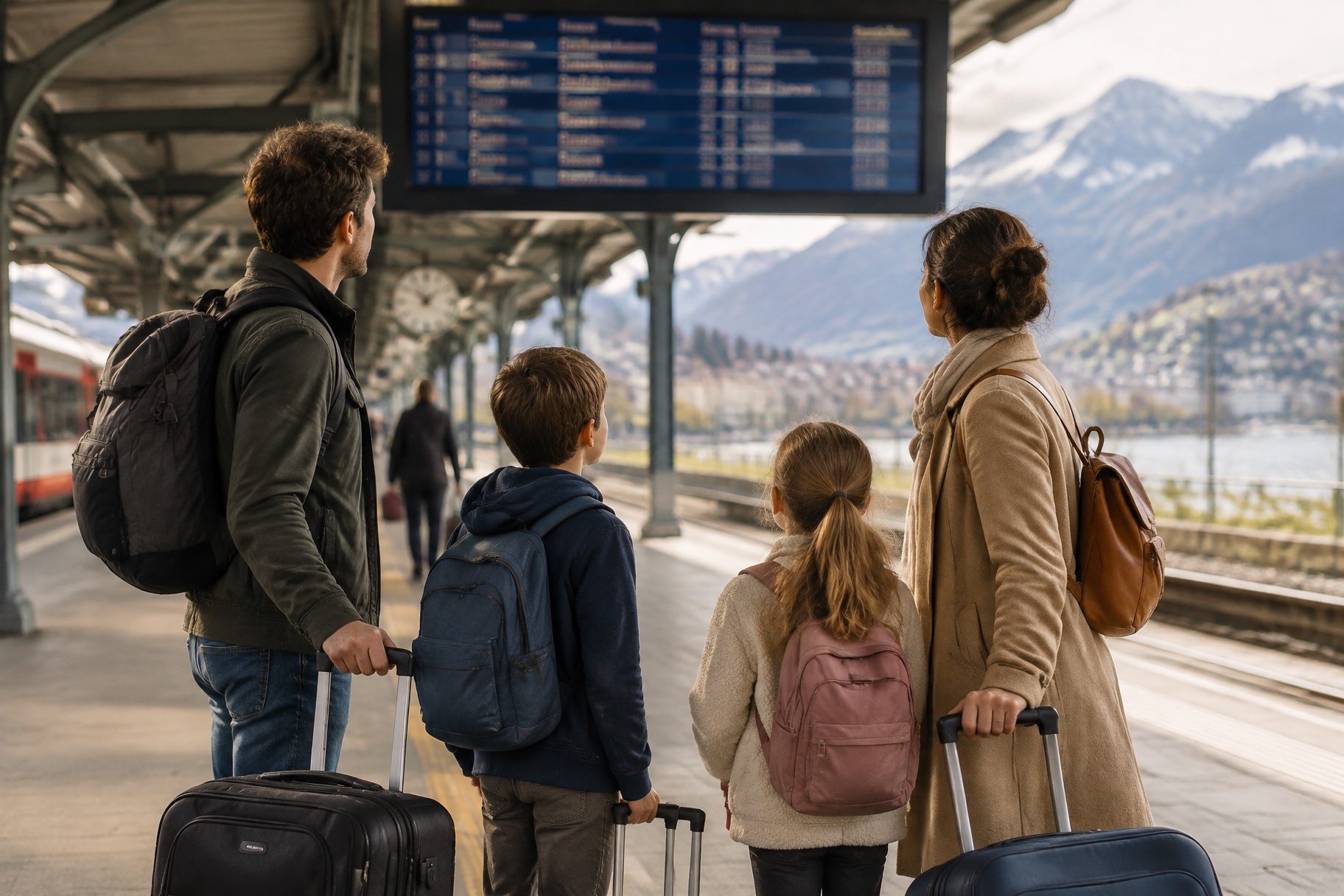
Bringing your family
- EU/EFTA nationals can bring their spouse, children and grandchildren under 21 (or older if dependent), and parents or grandparents they support, if they have suitable housing. Family members who come this way may work in Switzerland, whatever their nationality.
- Third-country nationals with a B or C permit can also bring their family. The spouse needs spoken language skills at A1 level, or must be enrolled in a course. Ask the migration office about work rules and deadlines for your family members.
Language and the C permit
For third-country nationals, language skills matter later too. They’re measured in the local national language: German in Zürich, Basel and Zug, French in Geneva and Lausanne.
| Purpose | Required level |
|---|---|
| Family reunification | A1 spoken, or course enrolment |
| Ordinary C permit | A2 spoken, A1 written |
| Early C permit | B1 spoken, A1 written |
You can prove your level with certificates such as fide, Goethe or telc, or if it’s your native language or you went to school in it for at least three years. Nationals of Germany, Austria and Liechtenstein are exempt in Zürich and Zug. In Zug, the C permit also requires no social assistance in the last five years, no debt enforcement entries or tax arrears and an employment contract that hasn’t been terminated. These levels don’t apply to EU/EFTA nationals.
Swiss words you’ll hear
- Gemeinde / commune: municipality
- Einwohnerkontrolle / Contrôle des habitants: residents’ office
- Migrationsamt / OCPM: migration office
- Ausländerausweis: permit card
- Zusicherung: assurance of permit
Sources and last update
As of November 2026
- SEM FAQ free movement (sem.admin.ch)
- admin.ch, quotas 2026
- Stadt Zürich, Zuzug (stadt-zuerich.ch)
- OCPM Geneva (ge.ch/annoncer-mon-arrivee-ocpm)
- Einwohneramt Basel-Stadt (bs.ch)
- Kanton Zug, Aufenthalt und Niederlassung (zg.ch)
- Lausanne, Contrôle des habitants (lausanne.ch)
- Migrationsamt Zürich, brochure on language requirements (zh.ch).
firstweeks provides general information, not legal or tax advice. Rules can change. Always check with the responsible authority.