Rules in your canton may differ. Check with your municipality.
Most expats never need a car
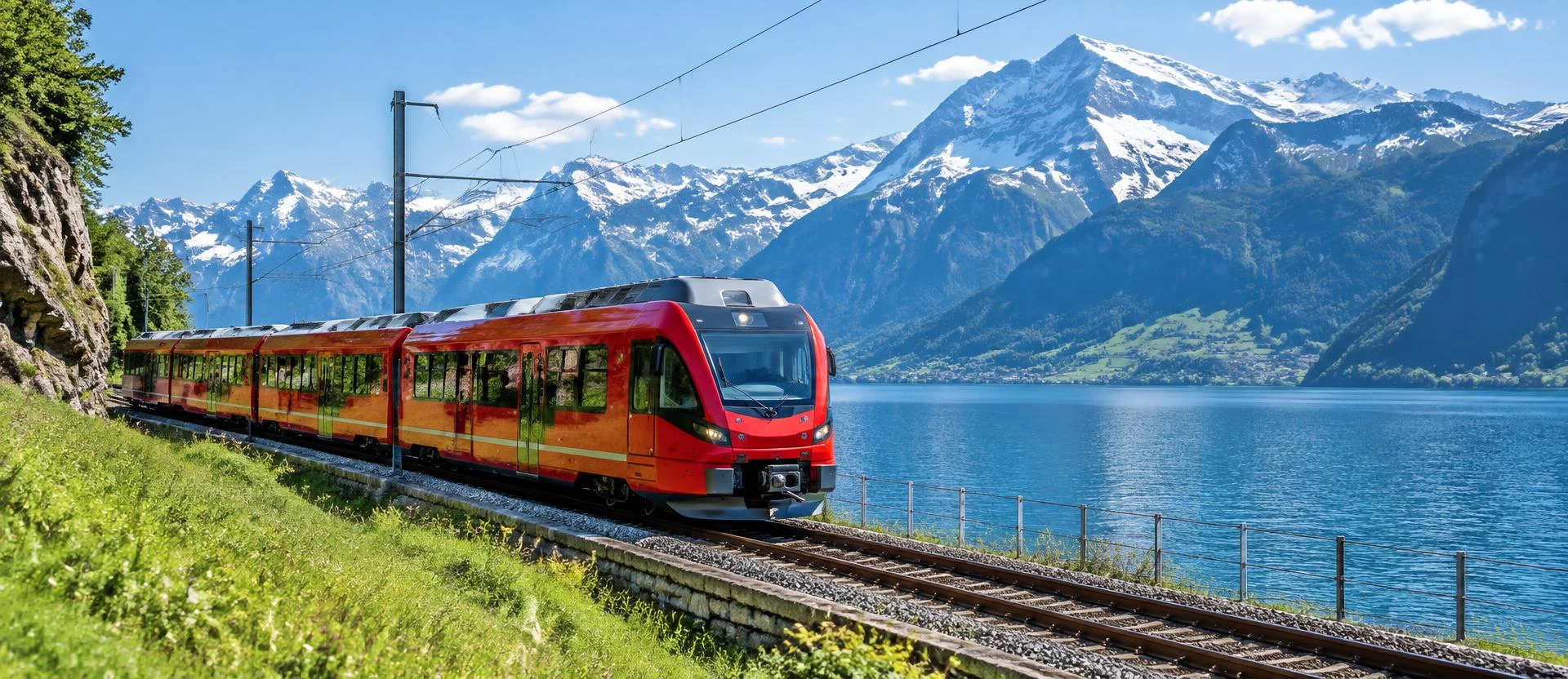
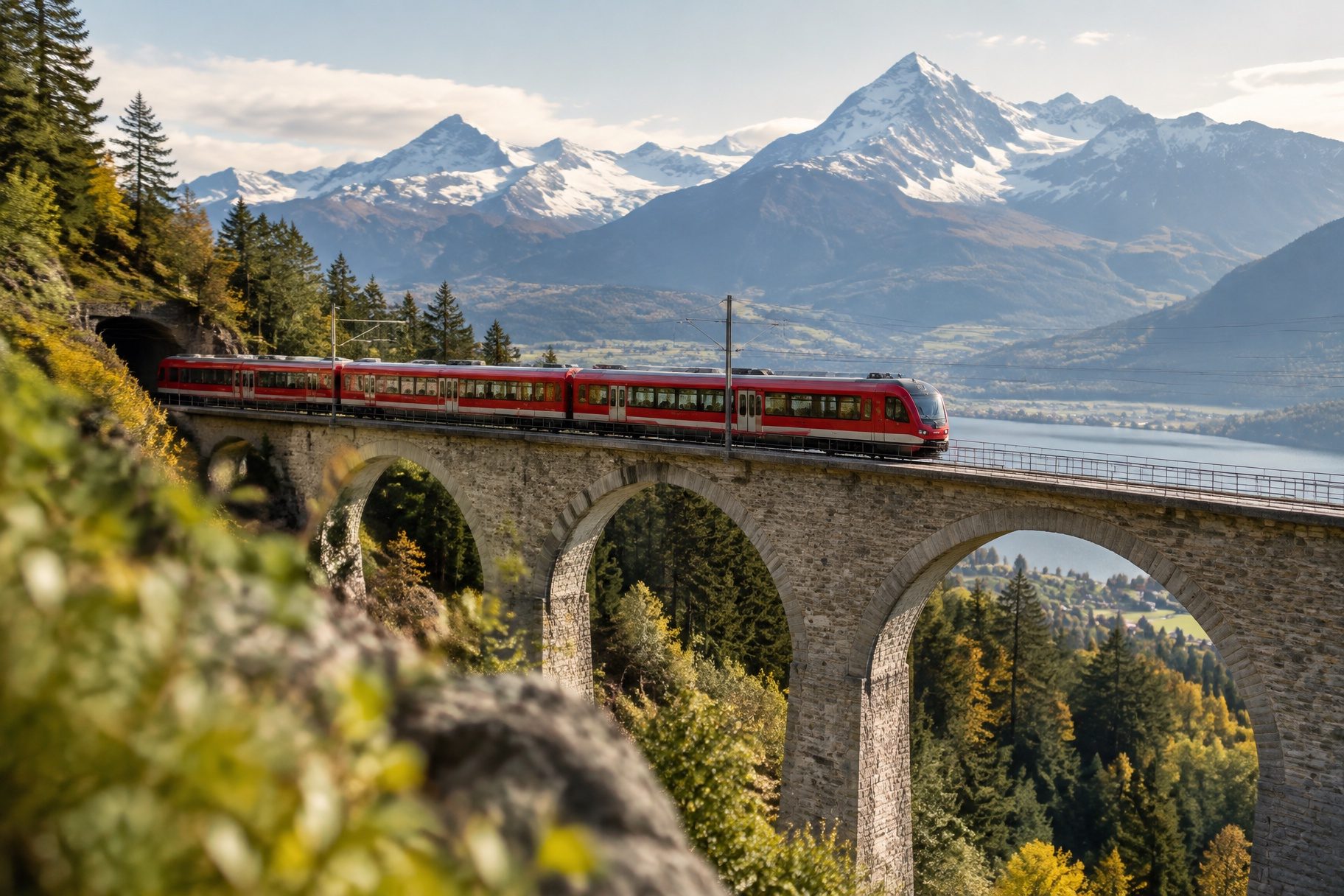
Swiss public transport is famous for a reason. Trains, trams, buses and boats work together as one system, connections are timed to each other and most journeys run on time. Many trains follow a clock-face timetable: they leave at the same minutes every hour, which makes them easy to remember. For most newcomers in Zürich, Geneva, Basel, Zug or Lausanne, a good pass and a bike are all you need.
On this page
Your tasks in this topic
A quick question to tailor your plan
Are you bringing a car?
A quick question to tailor your plan
Do you have a foreign driving licence?
One card for (almost) everything
Which pass is right for you
| Pass | What it does | Price (adults) |
|---|---|---|
| Halbtax (half-fare card) | 50% off most train, bus and boat tickets | CHF 190 in 2026; CHF 5 more from the timetable change on 13 December 2026 |
| Local zone pass | Unlimited travel in your city’s zones, monthly or yearly | Depends on your network and zones |
| GA (general travelcard) | Unlimited travel on almost all public transport | 2nd class CHF 4,095 per year from December 2026 (previously CHF 3,995) |
| Saver day passes and saver tickets | Cheaper fixed-time trips, when available | Varies |
How to choose: if you mostly commute within your city, start with the local zone pass. If you also take the train for weekend trips, add a Halbtax; it pays off quickly. If you commute between cities every day, for example from Zug to Zürich, compare the GA with a route pass.
Good to know: the Halbtax doesn’t reduce local monthly and annual passes. It halves single tickets, day passes and many longer journeys, but not your zone subscription.
A scenario: imagine you live in Zürich and work in the city centre. A ZVV zone pass covers your daily trips by tram and S-Bahn. A few weekends a month you take the train to the mountains or to visit friends in Bern. Adding a Halbtax halves those tickets, and after a handful of trips it has paid for itself. A GA would only make sense if you travelled much more.
Tickets and good habits
Buy your ticket before you board, in the app or at the machine. On most trams, buses and regional trains, there’s no conductor checking tickets at the door, but inspections are frequent, and travelling without a valid ticket is expensive. Check the zones before you buy a single ticket, especially for trips to the edge of your city. If you forget your SwissPass card, a photo of it isn’t enough; keep the app logged in as a backup.
Your city’s network
Each city has its own local network: ZVV in Zürich, TPG and the Léman Express regional trains in Geneva, BVB in Basel, S-Bahn and buses in Zug, the metro and buses (tl) in Lausanne. In Lausanne, the m2 metro climbs steeply from the lakeside to the hills, which you’ll appreciate on a hot day. From Basel and Geneva, it’s easy to reach France and Germany too.
Driving: exchange your licence within 12 months
If you have a foreign driving licence, you must exchange it for a Swiss one within 12 months of entry. After that, you may no longer drive with your foreign licence in Switzerland.
No control drive is needed (category B) if your licence is from an EU/EFTA country, the UK, the USA, Canada, Australia, Japan, South Korea, Singapore, New Zealand, Israel, Andorra, Monaco, San Marino, Taiwan, Morocco or Tunisia. Higher categories need a theory exam. All other countries: control drive.
The steps are usually the same everywhere:
- Do an eye test with a Swiss optician or doctor (in Zürich and Basel it’s valid for 24 months).
- Fill in the exchange form of your canton’s road traffic office.
- Hand in your licence, passport, permit, a photo and the eye test.
| City | Office | Good to know |
|---|---|---|
| Zürich | Strassenverkehrsamt | Identity check CHF 20 |
| Basel | MFK, Clarastrasse 38 | A glasses passport isn’t accepted for the eye test |
| Zug | Strassenverkehrsamt, Hinterbergstrasse 41, Steinhausen | No appointment needed |
| Geneva | OCV | |
| Lausanne | SAN |
Your new licence is normally issued on probation, unless you got your category A or B licence before 1 December 2005, or held it for more than one year before entry. Exchange fees vary by canton.
Bringing your car
If you bring your car as part of your move, declare it at the first entry after your move, at a staffed customs office, not in the “nothing to declare” lane. It’s duty-free if you’ve used it for at least six months abroad. Customs gives you test report 13.20 A, which you need for Swiss number plates. If you’ve used the car for less than six months, form 15.30 allows you to use it without paying duty for up to two years.
You then register your car with Swiss plates, generally within one year of moving. Check your canton’s practice with the road traffic office. Whether vehicle tax and VAT apply in your case is a question for customs.
The vignette and winter driving
To drive on Swiss motorways, you need a motorway vignette for CHF 40, as a sticker or an e-vignette. Winter tyres are recommended in the cold months, especially if you drive into the mountains.
Cycling
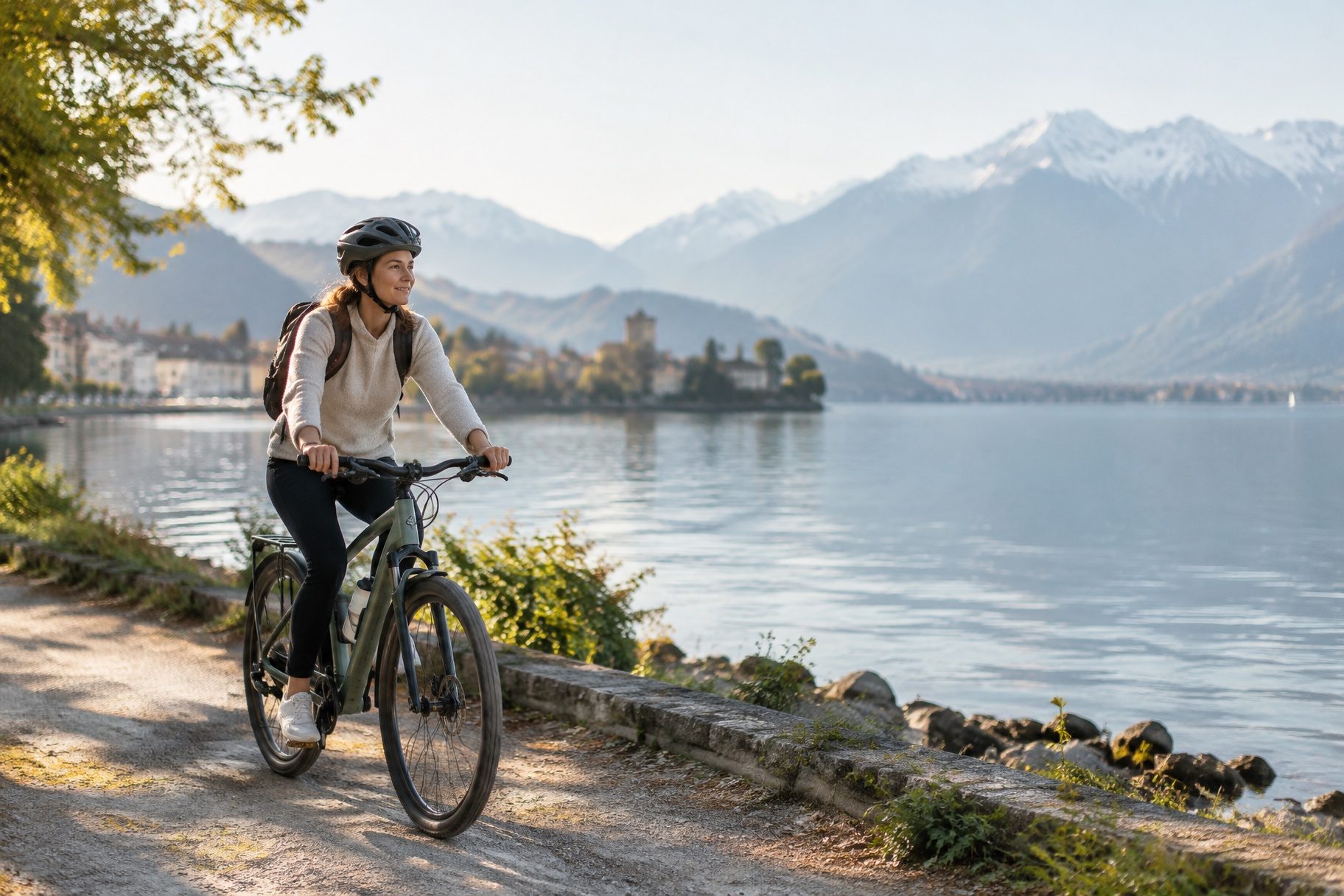
Swiss cities are increasingly bike-friendly, with more bike lanes and bike parking at stations. You can take your bike on many trains with a bike ticket, which makes weekend rides along lakes and rivers easy. Many people keep a simple bike for city trips and use the train for longer distances.
Car sharing
If you only need a car now and then, for an IKEA trip or a day in the mountains, car sharing can be a good alternative to owning one. Check what’s available in your neighbourhood.
Sources and last update
As of November 2026
- content pack v2, section 8: Halbtax (preispirat.ch
- srf.ch), GA (suedostschweiz.ch), Halbtax and local passes (moneyland.ch)
- Kanton Zürich, foreign driving licence (zh.ch)
- MFK Basel-Stadt, exchange form
- Strassenverkehrsamt Zug, exchange form 2026
- BAZG, vehicles (bazg.admin.ch/de/umzug-fahrzeuge)
- BAZG, FAQ household goods
- BAZG, motorway vignette (bazg.admin.ch).
firstweeks provides general information, not legal or tax advice. Rules can change. Always check with the responsible authority.