Rules in your canton may differ. Check with your municipality.
Moving with children
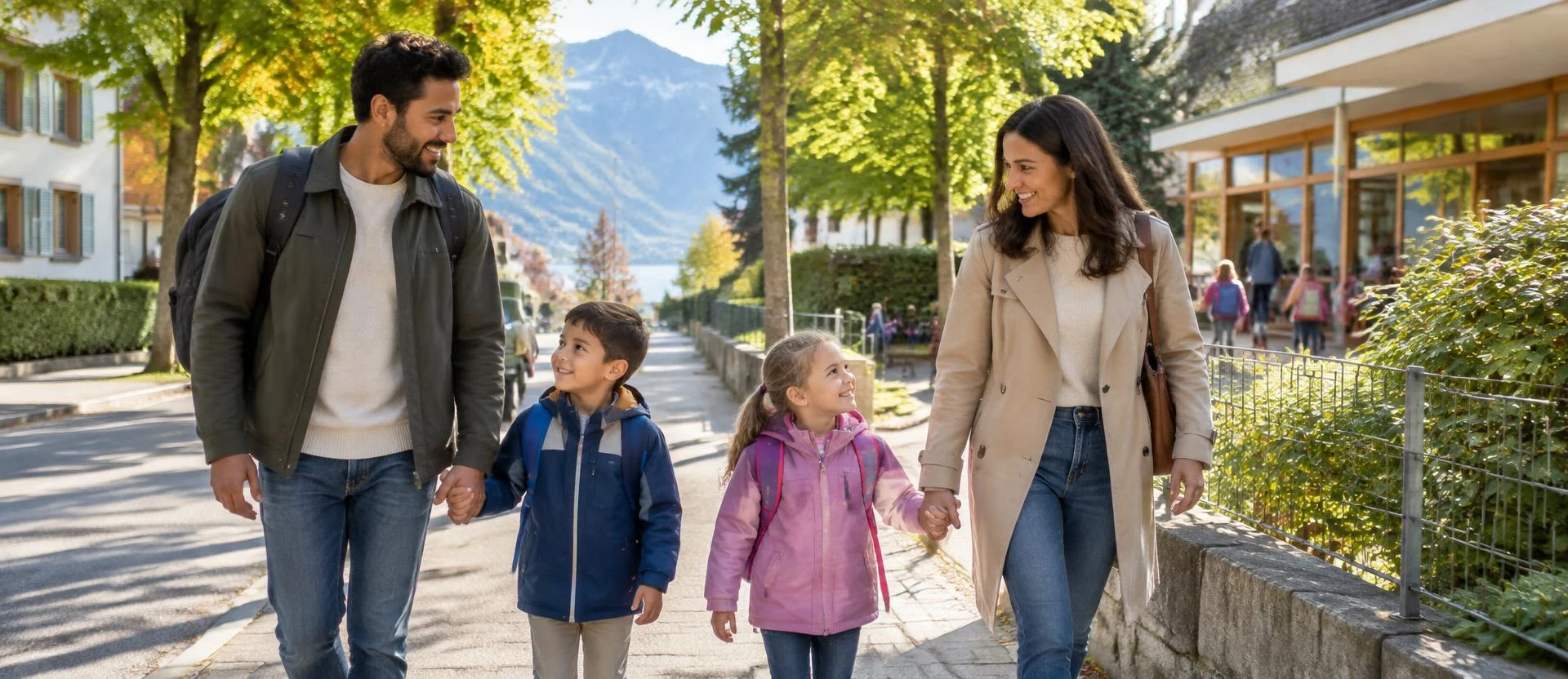
Switzerland is a wonderful place to grow up: safe streets, clean lakes, mountains within reach and children who walk to school on their own from the age of four. For parents, the system works a little differently from what you may know: school starts early, lunch is often at home, and childcare for small children needs planning. This guide helps you get it right from the start.
On this page
Your tasks in this topic
School starts at four
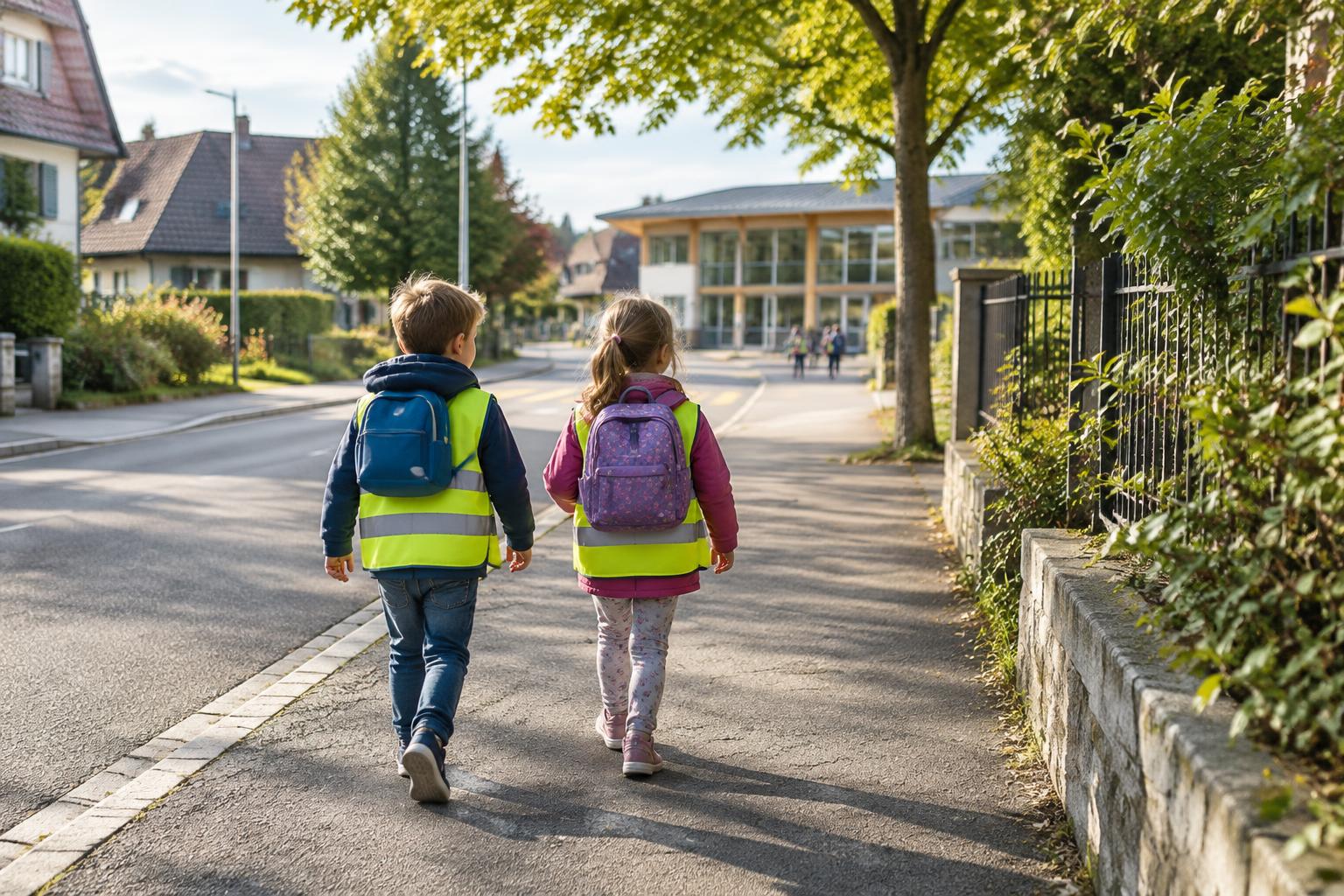
In most cantons, compulsory schooling starts when your child turns four by 31 July of that year, and it lasts eleven years, including two years of kindergarten. This applies in Zürich, Geneva, Basel-Stadt and Vaud. Zug did not join the national agreement on schooling (HarmoS) and has its own rules.
Register your child right after you arrive. In Zürich, children have the right and the duty to attend school whatever their residence status, and parents register them with the school administration of their municipality without delay. In Geneva, children who turn four by 31 July must be enrolled; public school, private school and home schooling are all permitted.
Public or international school?
Public schools are free, high quality and the fastest way into local life. Your child learns the local language, makes friends in the neighbourhood and becomes part of the community. Children are placed by age; in Zürich at most one year lower, and never only because they don’t speak German yet.
International schools teach in English (often with the IB curriculum), which can make sense for short stays or if you expect to move again. They charge fees, often have waiting lists and are less tied to the neighbourhood.
Many families choose public school for younger children and decide again later.
Language support
You don’t need to worry if your child doesn’t speak the local language yet. Public schools are used to it:
- Zürich: most children join a regular class and receive German as a second language lessons (DaZ). Some municipalities also offer reception classes for up to one year.
- Geneva: children join a regular class and attend a reception class (classe d’accueil) for half the day.
Children usually pick up the language faster than their parents.
Lunch and after-school care
One of the biggest surprises for many families: in many places, children come home for lunch. If both parents work, you’ll need lunch care and after-school care (Mittagstisch, Tagesstrukturen, parascolaire). Places must usually be booked through your municipality or school, so ask about them when you register.
Childcare for children under four
There is no federal right to a daycare place. Each canton and often each municipality has its own system:
Costs vary widely, and many municipalities subsidise childcare depending on your income (the city of Zug, for example, uses childcare vouchers). Get on several waiting lists as early as you can, ideally before you arrive.
Family allowances
Employees with AHV-liable income of at least CHF 630 per month receive family allowances, paid with the salary via the employer. Ask HR for the form and add your children’s birth certificates.
| Canton | Child allowance per month | Education allowance per month | Birth allowance |
|---|---|---|---|
| Federal minimum | CHF 215 | CHF 268 | depends on canton |
| Zürich | CHF 215 (from 12: CHF 268) | CHF 268 | none |
| Geneva | CHF 311 (from 3rd child: CHF 411) | CHF 415 / 515 | CHF 2,073 or 3,073 |
| Basel-Stadt | CHF 275 | CHF 325 | none |
| Zug | CHF 330 | CHF 330 (from 18: CHF 385) | none |
| Vaud | CHF 322 (from 3rd child: CHF 365) | CHF 425 / 468 | CHF 1,617 per child |
Amounts are for 2026; 2027 rates are not yet published.
Bringing your partner and children
- EU/EFTA nationals can bring their spouse and children under 21 (or older if dependent), provided they have suitable housing. Family members who come this way may work in Switzerland, whatever their nationality. This is good news for accompanying partners.
- Third-country nationals with a B or C permit can also bring their family. The spouse needs language skills at A1 level (spoken) or must be enrolled in a course. Ask the migration office about deadlines and work rules for your family members.
Health insurance for children
Every child living in Switzerland needs basic health insurance, from birth. Children often have a lower premium and a deductible of CHF 0 to CHF 600. Register your children at the same time as yourself, within three months of arrival. For newborns, register before or right after the birth.
Settling in as a family
Children usually settle in faster than adults, through school, sports and play. Look for:
- Clubs (Vereine): football, gymnastics, music, scouts.
- Playgrounds and school events: they’re where parents get to know each other.
- Parents’ associations: a good entry point for parents.
For the accompanying partner, the first months can feel lonely. Language courses, volunteering and expat groups are good first steps; see our guide on Making friends.
Sources and last update
As of November 2026
- www.bsv.admin.ch/dam/de/sd-web/acU7RgJgeisY/Arten%20und%20Ans%C3%A4tze%20der%20Familienzulagen_2026.pdf
- www.ge.ch/inscrire-mon-enfant-ecole-primaire
- www.stadt-zuerich.ch/web/de/lebenslagen/einwohner-services/umziehen-melden/zuzug.html
- www.ge.ch/annoncer-mon-arrivee-ocpm
- www.bs.ch/jsd/bdm/bevoelkerungsamt/einwohneramt/zuzug-den-kanton-basel-stadt
- zg.ch/de/migration-integration/einreise-und-aufenthalt/aufenthalt-und-niederlassung
- www.lausanne.ch/en/prestations/controle-des-habitants/arrivee-inscription-UE-AELE.html
- www.sem.admin.ch/sem/de/home/themen/fza_schweiz-eu-efta/eu-efta_buerger_schweiz/faq.html
firstweeks provides general information, not legal or tax advice. Rules can change. Always check with the responsible authority.