Public vs. international school
The short version
- Swiss public schools are free, local and well regarded. Children learn in the local language with support if they need it.
- International schools charge fees and teach mainly in English, often with an international curriculum.
- There’s no right answer. It depends on how long you’ll stay, your child’s age and what matters most to your family.
On this page
Two good options
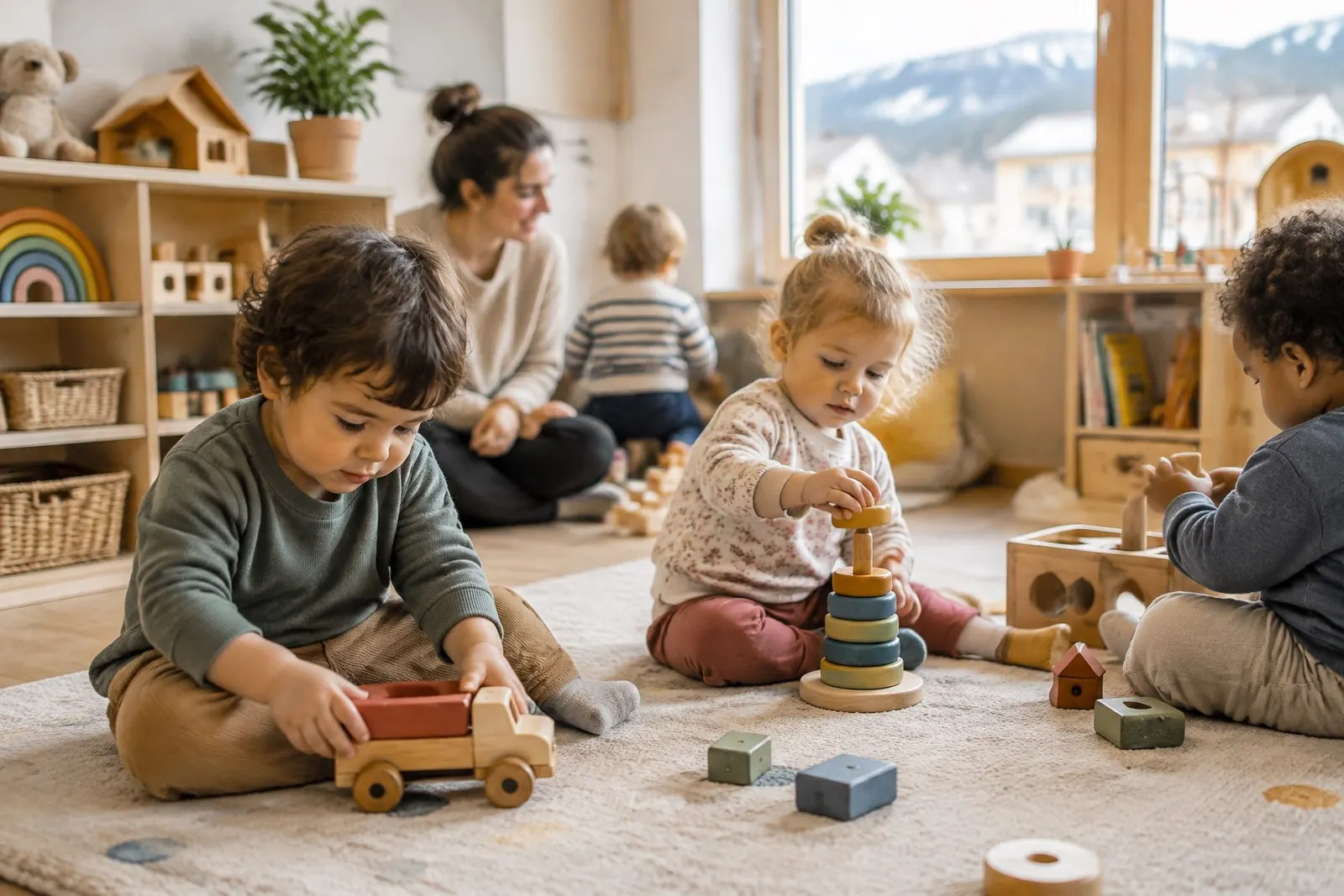
Many expat families arrive with one question: public or international? Both are legitimate choices. Switzerland’s public school system is well respected, and many international families choose it. International schools exist in or near all five cities we cover. Private and international schools are allowed everywhere.
In the cantons that follow the national school agreement (HarmoS), including Zürich, Geneva, Basel-Stadt and Vaud, compulsory schooling starts when a child turns four by 31 July and lasts 11 years, including two years of kindergarten. Zug follows its own rules.
Side by side
| Public school | International school | |
|---|---|---|
| Cost | Free basic education, guaranteed by the Federal Constitution | Tuition fees, often with extra costs for registration, transport or activities |
| Language | Local language (German or French), with language support | Mainly English, sometimes bilingual |
| Curriculum | Cantonal curriculum | International curricula, for example the International Baccalaureate (IB), or national curricula of other countries |
| Where | Your child goes to the school assigned for your address | You choose and apply; places may be limited |
| Classmates | Mostly local children from the neighbourhood | Families from many countries, often also on short assignments |
| Integration | Strong: friends nearby, local language, local life | Easier start; integration in the neighbourhood takes more effort |
| School day | Often shorter days; many children go home for lunch; care must be booked | Often longer days with lunch included |
| Moving on | Built for a life in Switzerland | Built for families who move between countries |
When public school often fits
- You plan to stay for several years, or don’t know yet.
- Your child is young. Children in kindergarten and early primary school often learn the language within months.
- You want your child to grow up with neighbours and local friends.
Public schools are used to children who don’t speak the language yet. In Zürich, children are placed by age, at most one year lower, never only because of missing German. Most join a regular class with German as a second language (DaZ). In Geneva, children join a regular class plus a half-day reception class (classe d’accueil). For Basel-Stadt and Vaud, ask your municipality about language support.
When international school often fits
- Your stay is short and fixed, and you’ll move to another country afterwards.
- Your child is older and in the middle of a curriculum, for example close to final exams.
- Continuity in English matters more to you than integration in the local language.
Check whether your employer contributes. Some relocation packages cover part of the school fees. Ask HR before you decide.
Questions to ask
Ask yourselves:
- How long do we really expect to stay? What if it’s longer?
- How old is our child, and how did they cope with change before?
- Where will our child finish school, and with which diploma?
- What’s our budget for the whole stay, not just year one?
Ask a public school or your municipal school office:
- Which school is assigned to our address?
- How does language support work, and for how long?
- What are the school hours? Is there lunch care (Mittagstisch, Tagesstrukturen, parascolaire)?
- How do teachers communicate with parents who don’t speak the language yet?
Ask an international school:
- Which curriculum and diplomas do you offer, and are they recognised where we may go next?
- What are the full yearly costs, including extras?
- Is there a waiting list? When should we apply?
- Do you teach the local language, and how much?
- What happens if we stay longer than planned, or need to leave mid-year?
You must register either way
Children of school age must attend school. If you choose public school, register your child with your municipality’s school office right after you arrive (in Geneva with the canton’s school department). If you choose an international school, ask how attendance is reported to the authorities.
Local tip
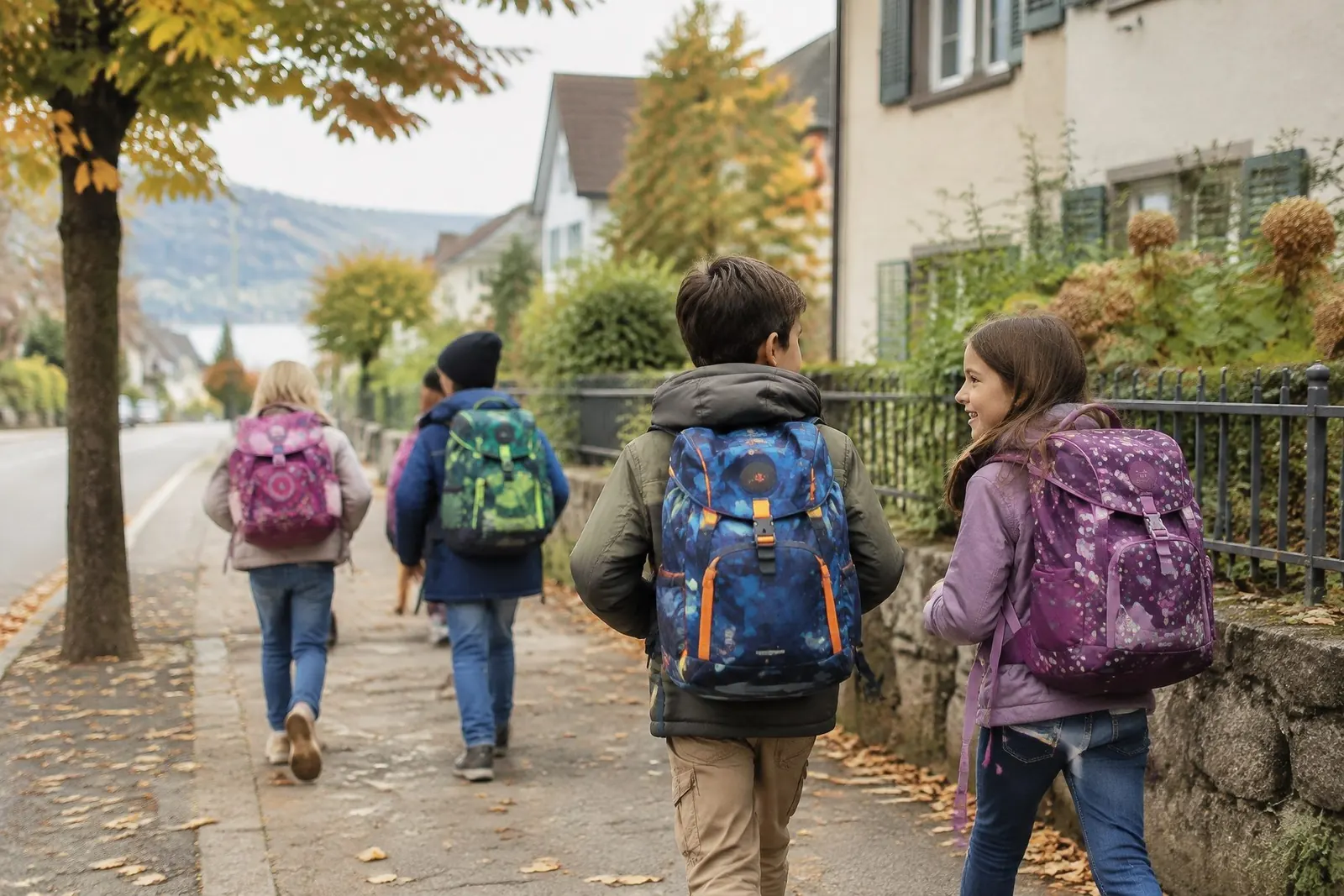
Visit both before you decide. Walk the route to the local school at 8 in the morning and see the children on their way. It tells you more about everyday life than any brochure.
Related tasks
In your city
Sources and last update
Last checked: November 2026
- School start, duration, HarmoS, language support in Zürich and Geneva, private schools allowed: firstweeks content brief, section 3.5
- Free basic education (Federal Constitution, Art. 19): https://www.fedlex.admin.ch/eli/cc/1999/404/en
- School registration Zürich: https://www.zh.ch/de/bildung/informationen-fuer-schulen/informationen-volksschule/schulinfo-schule-migration/schulinfo-einschulung-neuzugezogene.html
- School registration Geneva: https://www.ge.ch/inscrire-mon-enfant-ecole-primaire
- Practical guidance by firstweeks.
firstweeks provides general information, not legal or tax advice. Rules can change. Always check with the responsible authority.