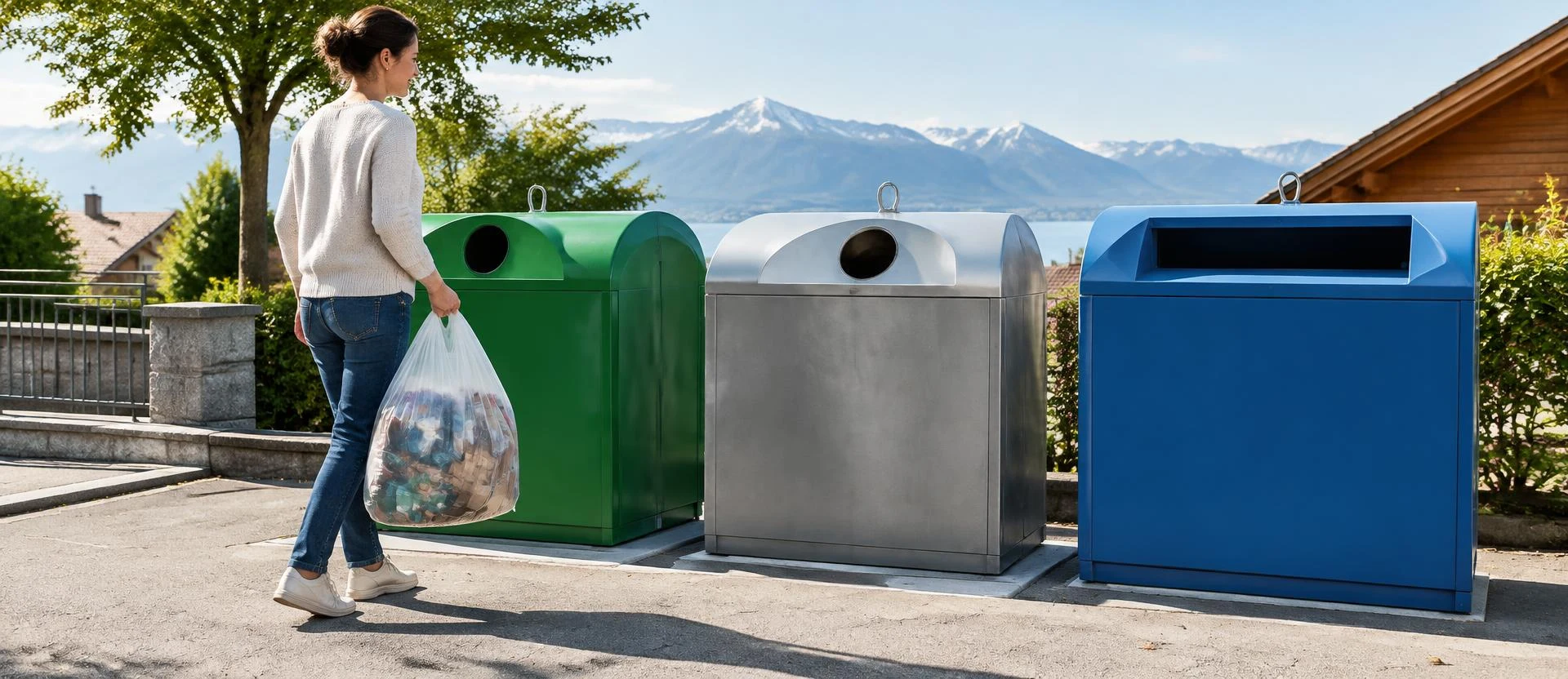
Rules in your canton may differ. Check with your municipality.
The little things nobody tells you
There are things no official website explains, but every neighbour knows: when to put the bins out, why the shops are closed on Sunday, what to say when you step into a lift. None of it is complicated. Once you know the rhythm, Swiss everyday life is calm, reliable and surprisingly friendly. This guide covers the unwritten rules, so you hear them here first and not from your neighbour.
On this page
Your tasks in this topic
- eSIM can be ready on day 1.
- Prepaid works without credit history.
- Switch to a subscription once you have your permit.
- Check which providers serve your address.
- Order 2 to 3 weeks before moving in.
- Expect the Serafe invoice: CHF 335 in 2026, CHF 312 from 2027.
- Order basics before moving in: mattress, lamps, kitchen items.
- Check second-hand platforms for affordable furniture.
- Set up grocery delivery for the first weeks.
Waste and recycling
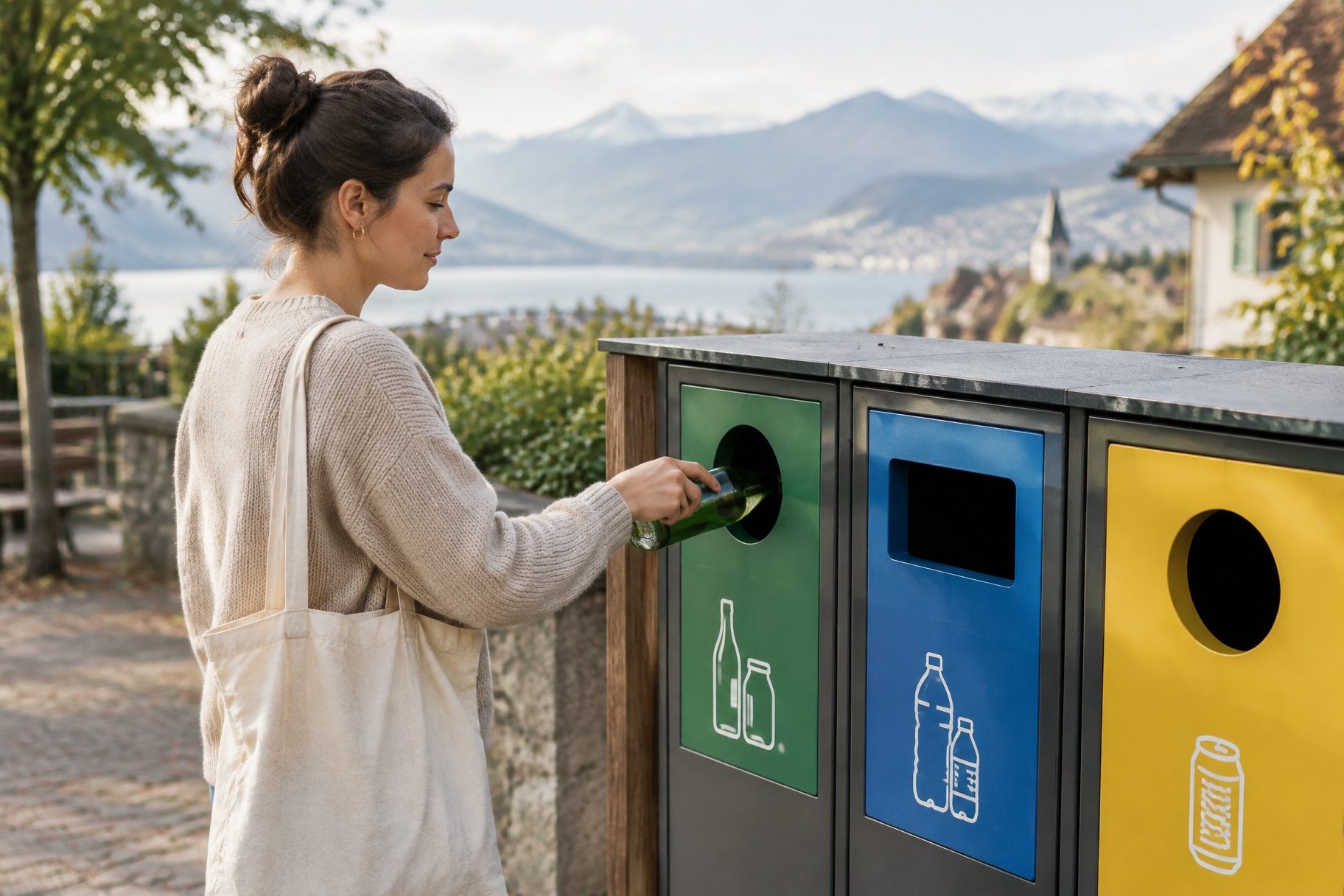
Waste is taken seriously in Switzerland, and it’s organised locally:
- Fee bags or stickers: many municipalities sell official fee bags or stickers for household waste. Check which ones your municipality uses before your first collection day.
- Separate collection: glass, PET, aluminium and paper are collected separately, at local recycling points or on set collection days.
- Collection days: your municipality publishes a waste calendar, often also as an app. Download it in your first week.
A practical tip: check your house rules (Hausordnung) and ask the caretaker (Hauswart) where the bins are and how things work in your building. It’s also a nice way to introduce yourself.
The laundry room
Many apartment buildings share a laundry room (Waschküche) instead of having a washing machine in every flat. Each household has its slot, set in a schedule or booked on a list or a digital system. Stick to your slot, clean the machines and the lint filter after use and take your laundry out on time. It sounds small, but the laundry room is where many neighbourly relationships are made, or strained.
Quiet times
In most buildings, evenings, Sundays and public holidays are quiet times. That means no drilling, no loud music and no vacuuming late at night. These are local customs and house rules, not federal law, so the exact hours depend on your building. Check your Hausordnung.
Public holidays also differ from place to place. 1 August is the only national public holiday; each canton can add up to eight more. Look up your canton’s holidays at the beginning of the year.
Shopping
Most shops are closed on Sundays. Train station shops and some petrol station shops are open, and they become your best friend on a Sunday evening when the fridge is empty. Plan your big shop for Saturday, or set up grocery delivery for the first weeks.
Paying
Cards work almost everywhere, and TWINT, the Swiss mobile payment app, is used for everything from market stalls to splitting a dinner bill. Cash is still accepted almost everywhere. In restaurants, service is generally included in the price; rounding up or leaving a small tip for good service is common but not expected.
Greetings and manners
- Greet people: say hello when you enter a small shop, a doctor’s waiting room or a lift. “Grüezi” in Zürich, Zug and Basel, “Bonjour” in Geneva and Lausanne. Say goodbye when you leave.
- Shake hands and look people in the eye when you meet someone.
- Be on time. Five minutes late is late. If you’re delayed, send a short message.
- Formal first: use the formal “Sie” or “vous” until someone offers the informal form.
- Bring something small when you’re invited to someone’s home, such as flowers or chocolate.
Language
In Zürich, Basel and Zug, people speak Swiss German dialects in everyday life. Swiss German differs from standard German in speech, not in writing: newspapers, letters and signs are in standard German. Swiss German has no standard spelling for most dialect words, so the same word may be written in different ways in text messages. Don’t worry: people switch to standard German or English when asked.
In Geneva and Lausanne, the language is French. English is common at work in international settings, but a few words of the local language go a long way with neighbours, at the bakery and at the residents’ office.
Phone, internet and post
A Swiss mobile number makes life easier from day one: banks, landlords and apps send codes by SMS. An eSIM can be ready on your first day, and prepaid works without a credit history. Order internet two to three weeks before you move in. Keep an eye on your letterbox too: much official communication in Switzerland still arrives on paper, including tax letters and your registration confirmation.
Healthcare basics
- For minor issues: start at the pharmacy. Pharmacists give advice and can tell you whether you need a doctor.
- Finding a doctor: many family doctors don’t take new patients. Ask colleagues and neighbours, use online booking platforms, or start with a telemedicine model. Our Health and insurance guide explains the options.
- Emergencies: hospital emergency departments are called Notfall in German and Urgences in French.
Emergency numbers
Save these in your phone today:
| Number | Service |
|---|---|
| 112 | European emergency number, works with foreign SIM cards and without credit |
| 117 | Police |
| 118 | Fire service |
| 144 | Ambulance |
| 145 | Poison control (Tox Info Suisse) |
| 1414 | Rega air rescue |
| 143 | Helping Hand counselling (CHF 0.20 to 0.70 per call) |
| 147 | Pro Juventute helpline for children and young people |
| 0800 117 117 | SBB Transport Police |
Is this legit?
Some letters look strange but are completely normal: the Serafe invoice is the mandatory household media fee, not a scam. Others aren’t: be careful with text messages asking you to pay urgently via a link, especially if they claim to be from the post, a parcel service or a tax office. Official Swiss authorities send letters. If in doubt, contact the sender through its official website.
Sources and last update
As of November 2026
- content brief, section 3.9
- content pack v2, sections 2.9 and 7
- ch.ch, police and emergency numbers (ch.ch/en/police)
- ch.ch, holidays and public holidays (ch.ch/en/holidays-and-public-holidays)
- Serafe (serafe.ch).
firstweeks provides general information, not legal or tax advice. Rules can change. Always check with the responsible authority.