
Rules in your canton may differ. Check with your municipality.
Getting your finances set up
Money in Switzerland runs smoothly once three things are in place: a Swiss bank account, an understanding of what’s deducted from your salary, and a sense of how you’re taxed. This guide covers all three, plus the letters that tend to confuse newcomers.
On this page
Your tasks in this topic
- Compare account fees and English support.
- Have passport, contract and address ready.
- Give your IBAN to HR before the first payroll.
Time needed: 1 to 10 days.
Your Swiss bank account
Your employer needs a Swiss IBAN to pay your salary, and your landlord, health insurer and phone provider will all expect payments from a Swiss account. Open one as early as you can. Some banks let you start before you arrive.
When you compare banks, look at:
- account and card fees
- English-language support
- the quality of the app
- whether you can open the account online
Bring your passport, your employment contract and your Swiss address (or arrival date). Without a Swiss address, some banks ask for extra documents. Once the account is open, send your IBAN to HR before your first payroll.
Paying like a local
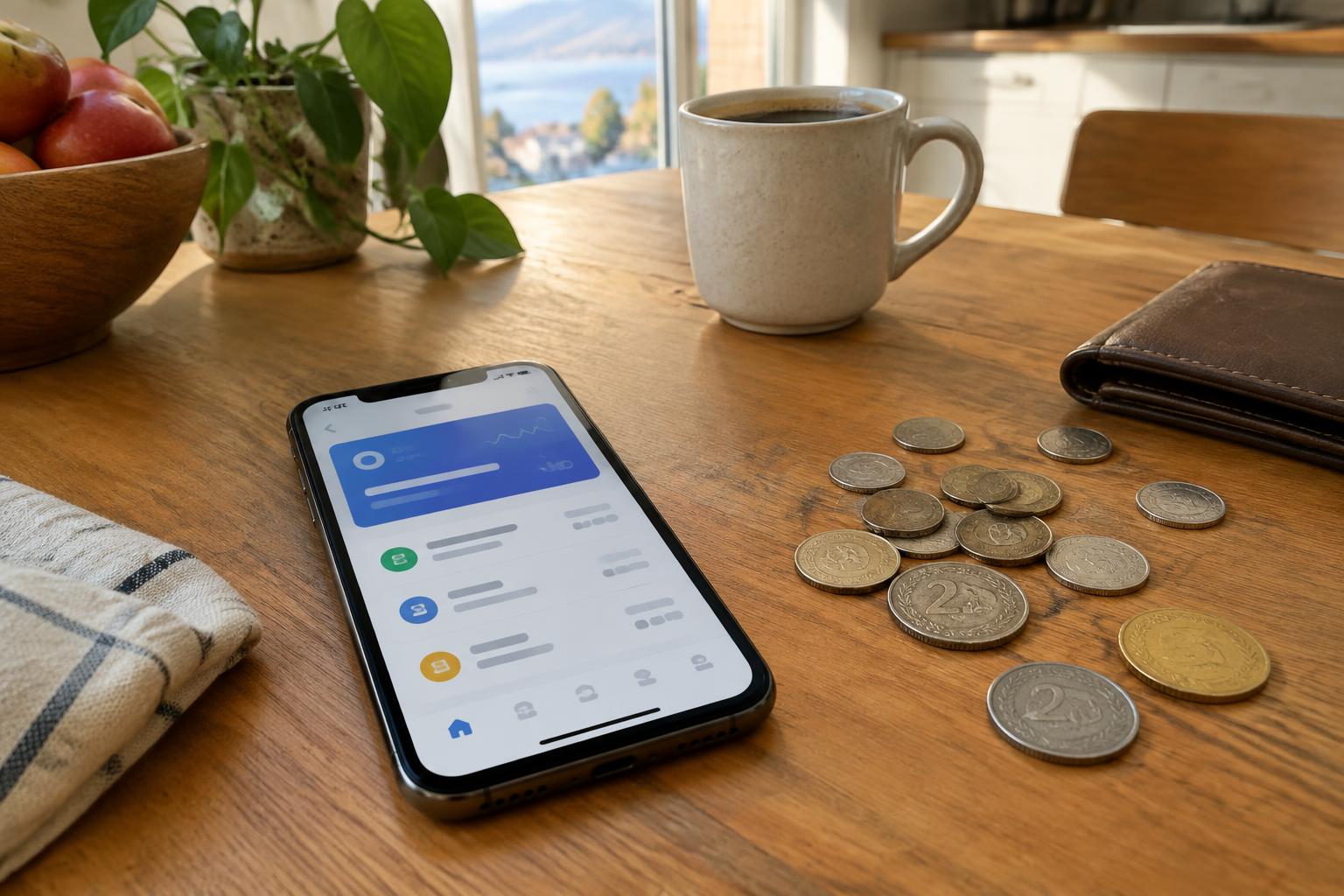
- TWINT: the Swiss mobile payment app. People use it to split dinners, pay at markets and buy train tickets. You’ll be asked “Hast du TWINT?” sooner than you think.
- QR bills: most invoices arrive with a QR code you scan in your banking app.
- eBill: many companies send invoices directly into your online banking for approval.
- Cash: still accepted almost everywhere, and some small shops and market stalls prefer it.
Your payslip, line by line
Many newcomers are surprised by how much lower their net salary is than the gross figure in their contract. A typical Swiss payslip shows:
- Social security (AHV/IV/EO): state pension, disability and income compensation.
- Unemployment insurance (ALV).
- Pension fund (Pensionskasse / BVG): your occupational pension, with your employer paying at least the same amount.
- Accident insurance: for non-work accidents.
- Withholding tax (Quellensteuer): if you don’t have a C permit.
Check your payslip in your first months. If the tariff code, the number of children or your marital status is wrong, tell HR right away.
Withholding tax: how most newcomers are taxed
If you’re a foreign employee living in Switzerland without a C permit, your taxes are usually deducted directly from your salary as withholding tax (Quellensteuer / impôt à la source). The exception is if you’re married to a Swiss citizen or a C permit holder; then you’re taxed in the ordinary way.
The withholding tax covers federal, cantonal and municipal tax. The rate depends on your canton, your income and your tariff code:
- A: single
- B: married, spouse not working
- C: married, both working; the other spouse’s income is assumed at a median wage of CHF 70,500
- H: single parent
The digit after the letter shows the number of children. Your religion also matters: if you leave a church, tell your employer and the tax office.
The NOV decision
Withholding tax is simple, but it doesn’t take all possible deductions into account. That’s where the subsequent ordinary assessment (NOV / TOU) comes in.
- Mandatory if your gross income is CHF 120,000 or more per year (per person; spouses’ salaries are not added together). Additional income or assets can also trigger it, depending on the canton.
- Voluntary on request if you earn less. You apply by 31 March of the following year. For tax year 2026 that’s 31 March 2027. Zug grants no extension.
- Irrevocable once you apply: you’ll file a full tax return every year until your withholding tax ends (for example when you get a C permit).
Why would you apply voluntarily? Because the NOV is the only way to claim deductions such as pillar 3a contributions. Whether it pays off depends on your situation. The assessment can be higher or lower than the withholding tax. It’s a real decision, and a good moment to talk to an expert.

Pillar 3a: save and reduce taxes
Pillar 3a is private pension savings with tax benefits:
| Year | With pension fund | Without pension fund |
|---|---|---|
| 2026 | up to CHF 7,258 | up to 20% of income, max. CHF 36,288 |
| 2027 | CHF 7,373 | CHF 36,864 |
Payments must be credited by 31 December. Since 2025, missed years can be paid in later (up to 10 years back), but only for years from 2025 onwards and only if the current year’s contribution is paid in full. If you’re taxed at source, you can usually only deduct 3a payments through the NOV.
Letters you’ll get
- Serafe: the household media fee for radio and TV. It’s real and mandatory: CHF 335 in 2026, CHF 312 from 1 January 2027.
- Tax office: withholding tax information, NOV forms or a tax return. Look at the deadline first.
- Payment order (Zahlungsbefehl / commandement de payer): an official debt collection document.
- If you think the claim is wrong, you can object (Rechtsvorschlag) within 10 days, without giving a reason, directly to the person delivering it or to the debt collection office.
- If you owe the money, you have 20 days to pay.
- Never ignore it: a debt collection entry can make it much harder to rent a flat.
Is this legit?
Be careful with messages asking you to pay urgently via a link, especially if they claim to be from a tax office, the post or a parcel service. Official Swiss authorities send letters, not threatening text messages. If in doubt, contact the authority through its official website.
Sources and last update
As of November 2026
- ch.ch/de/quellensteuer
- www.stadt-zuerich.ch/web/de/lebenslagen/einwohner-services/umziehen-melden/zuzug.html
- www.ge.ch/annoncer-mon-arrivee-ocpm
- www.bs.ch/jsd/bdm/bevoelkerungsamt/einwohneramt/zuzug-den-kanton-basel-stadt
- zg.ch/de/migration-integration/einreise-und-aufenthalt/aufenthalt-und-niederlassung
- www.lausanne.ch/en/prestations/controle-des-habitants/arrivee-inscription-UE-AELE.html
- www.sem.admin.ch/sem/de/home/themen/fza_schweiz-eu-efta/eu-efta_buerger_schweiz/faq.html
firstweeks provides general information, not legal or tax advice. Rules can change. Always check with the responsible authority.